
What is Seabuckthorn? The plant, the name, and the place
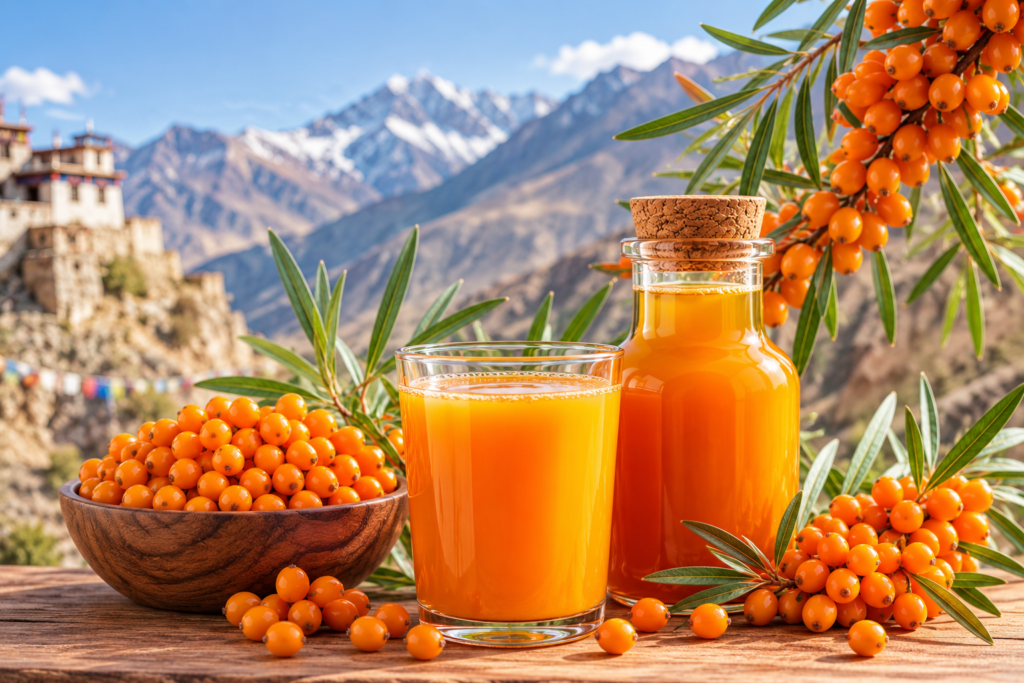
Seabuckthorn (Hippophae rhamnoides) is a deciduous shrub in the Elaeagnaceae family, native to the cold desert ecosystems of Central Asia, the Himalayas, and parts of Europe.
In Himachal Pradesh, it is known locally as Chharma particularly in the Lahaul-Spiti and Kinnaur regions where it grows most abundantly. In Ladakh, it is sometimes called Tsermang.
The Government of India has formally recognised seabuckthorn’s significance. Under the Central Government’s One District One Product (ODOP) scheme, seabuckthorn cultivation and processing was selected for Lahaul-Spiti district acknowledging both its nutritional value and its potential for improving the livelihoods of high-altitude tribal communities.
The Spiti variety grows at 3,500 metres and above. At that altitude, the intensity of UV radiation, the extreme temperature swings between day and night, and the nutrient-dense glacial soils push the plant to produce protective compounds at concentrations significantly higher than lowland equivalents. The stress produces the potency.
This is not unique to seabuckthorn altitude stress concentration is well-documented across high-altitude medicinal plants but seabuckthorn’s nutritional profile makes the effect particularly striking.
The nutritional profile what makes it genuinely extraordinary
The claim that seabuckthorn is one of the most nutritionally complete plant foods on earth is not exaggeration. Here is what it actually contains:
| Compound | What the research suggests |
|---|---|
| Omega-7 (Palmitoleic acid) | Found in almost no other plant source. The rarest of the omega fatty acids in plant foods. Research suggests it may support skin cell regeneration, gut lining integrity, and certain metabolic functions. |
| Omega-3 (ALA) | Essential fatty acid for cardiovascular and brain health. Supporting research is extensive across many food sources. |
| Omega-6 (Linoleic acid) | Essential fatty acid for skin barrier function, hormonal balance, cell membrane integrity. |
| Omega-9 (Oleic acid) | Monounsaturated fat associated with cardiovascular health, the same fatty acid that makes olive oil beneficial. |
| Vitamin C | Spiti seabuckthorn is documented to contain approximately 695–800mg Vitamin C per 100g compared to 50mg in oranges. Approximately 12–15× higher. |
| Vitamin E (tocopherols) | Antioxidant. Skin health, cell protection, immune function. |
| Vitamin A (carotenoids) | Eye health, immune function, skin repair. The deep orange colour is directly related to carotenoid concentration. |
| Vitamin K, B1, B2, B6 | Bone metabolism, energy production, nerve function. |
| 60+ flavonoids and antioxidants | A spectrum of phytochemical compounds with antioxidant activity. Research suggests these may help protect cells from oxidative stress. |
| 20+ minerals (iron, calcium, potassium, magnesium) | Essential minerals for blood, bone, cardiovascular, and neurological function. |
| 18 amino acids | Including all 8 essential amino acids makes seabuckthorn an unusually complete plant protein source. |
The DRDO research and high altitude nutrition
The DRDO’s Defence Institute of High Altitude Research (DIHAR) in Leh has studied seabuckthorn extensively for its application in high-altitude soldier nutrition specifically because it provides a concentrated nutritional supplement that can be produced locally at altitude.
This institutional validation from a government defence research body is among the strongest endorsements any food product can carry.
The 7 areas where seabuckthorn may support health
⚠ COMPLIANCE: Each benefit below is stated as traditional use or research-direction. None constitute a medical claim. Consult a qualified practitioner for specific health conditions.
1. Immune system support
The combination of Vitamin C (at 12–15× orange concentration), Vitamin E, and a broad spectrum of antioxidant flavonoids makes seabuckthorn one of the most nutritionally supported plant foods for immune function.
Research suggests regular consumption of Vitamin C-rich foods may support immune response and seabuckthorn’s Vitamin C density makes it a particularly concentrated source.
2. Skin health and anti-ageing
The Omega-7 content is the most compelling aspect for skin health.
Omega-7 (palmitoleic acid) is a component of human skin sebum supplementing with plant-based Omega-7 is theorised to support the skin’s own lipid barrier.
Combined with Vitamin E (tocopherols) and carotenoids (Vitamin A precursors), seabuckthorn has been researched specifically for dermatological applications. Several studies suggest it may support skin elasticity and moisture retention in ageing or dry skin.
3. Gut health
The Omega-7 content has been researched for potential gut lining support.
Some research suggests palmitoleic acid may help maintain the integrity of the intestinal epithelium the mucus lining of the gut.
Traditional use of seabuckthorn in Central Asian medicine specifically includes gut and digestive applications.
4. Cardiovascular support
The combination of Omega-3, Omega-9, flavonoids, and Vitamin E makes seabuckthorn nutritionally aligned with cardiovascular health.
Research suggests these compounds may support healthy cholesterol profiles and vascular function, though specific clinical trial data on seabuckthorn for cardiovascular outcomes remains limited.
5. Liver health (traditional use)
Traditional Tibetan and Mongolian medicine which has used seabuckthorn for over 1,300 years (documented in the Sibu Yidian, a Tibetan medical text) specifically records seabuckthorn as a liver-supportive herb.
Some preliminary research on seabuckthorn seed oil suggests potential hepatoprotective (liver-protecting) activity.
6. Eye health
The high Vitamin A (carotenoid) content makes seabuckthorn nutritionally supportive for eye health.
Carotenoids, particularly lutein and zeaxanthin (both found in seabuckthorn), have been extensively researched for their role in protecting the macula and reducing risk of age-related macular degeneration.
7. Energy and adaptation at altitude
DRDO’s research into seabuckthorn specifically focused on its role in supporting energy production and oxygen utilisation at high altitude where the body is under sustained physiological stress.
The combination of B vitamins, minerals, and adaptogenic compounds in seabuckthorn was identified as particularly relevant for high-altitude performance.
Juice vs Oil vs Tea vs Powder choosing the right form
Quick guide: juice or powder for internal nutritional benefits; oil for skin and hair; tea for a daily caffeine-free herbal ritual.
| Form | Best for | Key compounds preserved | How to use |
|---|---|---|---|
| Juice / Concentrate | Daily nutrition, Omega-7 and Vitamin C supplementation, immunity | All water-soluble and fat-soluble compounds | 30–50ml diluted in water daily |
| Powder | Versatile daily use, smoothies, food, travel convenience | Omega-7 and fat-soluble vitamins well preserved; some Vitamin C loss in drying | Half to 1 teaspoon in smoothies, water, or yoghurt |
| Oil (berry + seed) | Skin and hair topical use, internal Omega-7 supplementation | Fat-soluble vitamins and omega fatty acids concentrated | Diluted in carrier oil for skin; 1–3ml internally |
| Herbal Tea | Herbal ritual, caffeine-free daily drink, herbal support | Flavonoids and some antioxidants from the herb blend; lower nutrient concentration than juice | 1 tsp steeped in 85°C water for 5–7 min |
For a full comparison of seabuckthorn product forms, see our guide: “Sea Buckthorn Juice vs Concentrate vs Oil vs Powder” → [INSERT LINK: /blog/seabuckthorn-forms-comparison-india/]
Why Spiti Valley source is the most important quality variable
Seabuckthorn grows across several Himalayan regions Ladakh, Kinnaur, Spiti, parts of Uttarakhand. Not all sources are equal. The Spiti Valley cold desert variety is considered particularly potent because of the extreme UV exposure and environmental stress at 3,500+ metres, which drives the plant to produce higher concentrations of protective compounds (carotenoids, Vitamin C, flavonoids) than the same species growing at lower altitudes.
When buying seabuckthorn in India, verify: Is the source Spiti Valley specifically? Is it FSSAI certified? Is it hand-harvested (not mechanically stripped)? Is it processed without heat treatment to preserve heat-sensitive nutrients?
Shop Kinnaur Organic Seabuckthorn Sourced Directly from Spiti Valley
FSSAI certified. Hand-harvested. Processed without heat treatment. Available in Juice, Powder, Oil, and Herbal Tea. Free delivery on orders above ₹2,500.
Shop Seabuckthorn Range → [https://kinnaurdrinksandfoods.com/product/seabuckthorn-juice-concentrate/]
Frequently asked questions
Is seabuckthorn safe to take every day?
Yes seabuckthorn is a food, not a pharmaceutical. Daily consumption of the juice, powder, or oil is appropriate for most adults as part of a balanced diet. If you are pregnant, breastfeeding, or taking prescription medication (particularly blood thinners the Omega-3 content may have mild anticoagulant effects at high doses), consult your doctor before making seabuckthorn a daily supplement.
How long before I notice any effects?
Seabuckthorn is not a quick-acting supplement. Traditional use and most research protocols use it over periods of 4–8 weeks consistently. For skin benefits, 6–12 weeks of regular use is a more realistic assessment window. Acute effects from Vitamin C consumption occur faster, but the Omega-7 and carotenoid-based benefits are cumulative.
Is Indian seabuckthorn as good as European or Chinese varieties?
The same plant species (Hippophae rhamnoides) grows across these regions, but altitude and growing conditions significantly affect nutrient concentration. Spiti Valley seabuckthorn is considered among the most potent available because of its extreme altitude higher than most European or Chinese growing regions. Indian-grown seabuckthorn is also free of import transit degradation.
What does seabuckthorn taste like?
Tart, citrusy, and intensely fruity somewhere between sour orange, passion fruit, and rose hip. The juice is assertive. Most people find it pleasurable when diluted and sometimes sweetened with a small amount of honey. The oil has a concentrated, earthy berry character. The tea is the most approachable form citrusy and herbal.
Where can I buy genuine Indian seabuckthorn online?
Look for: FSSAI certified, specified Spiti Valley or Himalayan origin, hand-harvested claim, and a seller who can answer specific sourcing questions. We source ours directly from tribal farming communities in Spiti Valley. See our full range: Kinnaur Organic Seabuckthorn → [INSERT LINK: /product-category/juice/]
Kinnaur Organic Drinks & Foods, FSSAI Licence No. LC 13320010000175. Our seabuckthorn is sourced directly from tribal farming communities in Spiti Valley, Himachal Pradesh.