


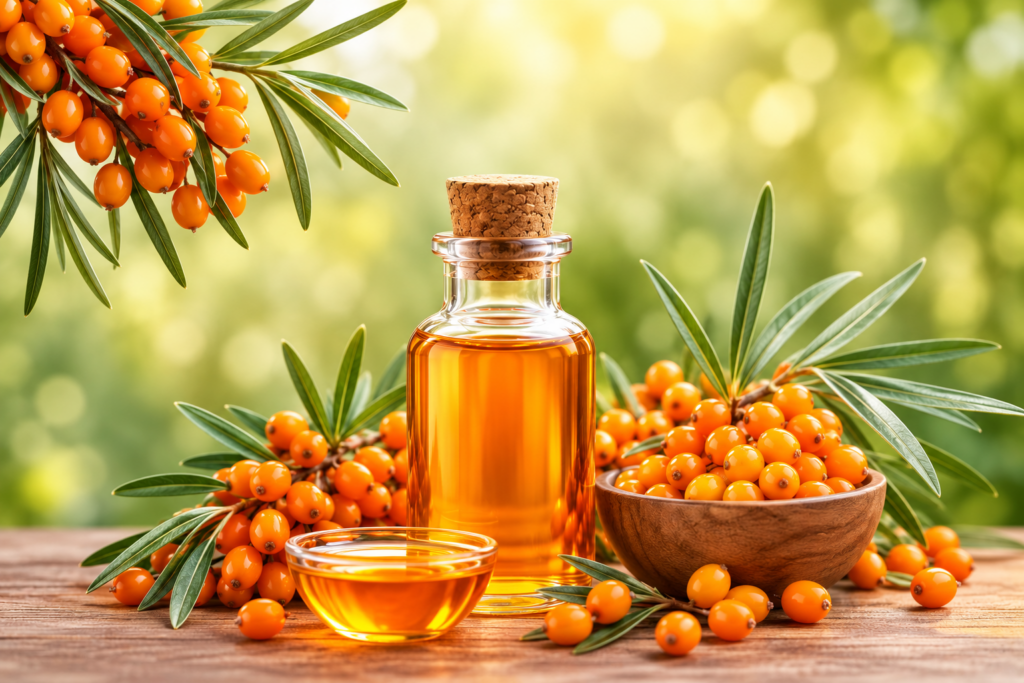
Most skin oils occupy one of two categories. The first is cheap and largely ineffective mineral oil, generic coconut oil repackaged in a brown glass bottle, and carrier oils with no active content worth mentioning. The second is expensive and overcomplicated serums with seventeen ingredients, each at concentrations too low to do anything meaningful. Seabuckthorn oil is neither. It contains Omega-7 fatty acid found in almost no other plant in a concentration that makes it genuinely active at normal usage amounts. It also turns your skin orange if you apply it wrong. Both facts are equally important.
This guide tells you exactly what seabuckthorn oil does, for which skin types, and how to avoid the orange situation.
Berry oil vs seed oil, the distinction nobody explains
Most seabuckthorn oils sold in India are pressed from either the berry pulp or the seeds , rarely both. Our product is dual-source , berry pulp and seeds together , which means it contains the full spectrum of seabuckthorn’s fat-soluble compounds.
| Source | Key compounds | Primary application |
|---|---|---|
| Berry pulp oil | Carotenoids (Vitamin A), Omega-7, Vitamin E | Deeply orange. Skin repair, anti-ageing, wound healing. Very concentrated. |
| Seed oil | Omega-3, Omega-6, Vitamin E (gamma-tocopherol) | Golden yellow. Anti-inflammatory, good for eczema-prone and sensitive skin. |
| Dual-source (our oil) | Full spectrum , berry + seed compounds | The broadest benefit profile. Berry colour with seed oil fatty acid depth. |
When a seabuckthorn oil is very pale yellow or nearly colourless ,that is seed oil only, or very diluted berry oil. The deep orange indicates carotenoid concentration. The orange is the point. If your seabuckthorn oil isn’t orange, question what you’re actually buying.
What seabuckthorn oil may do for skin , the honest breakdown
For dry and mature skin
The Omega-7 content is the most studied aspect for mature skin. Palmitoleic acid is a component of human skin sebum (the skin’s natural oil), and its concentration in sebum decreases with age. Topical application of Omega-7-rich oil is theorised to support the skin’s lipid barrier, potentially improving moisture retention and elasticity. Several peer-reviewed studies have explored this specifically for postmenopausal skin and chronically dry skin conditions.
For oily and combination skin
Counter-intuitively, seabuckthorn oil can work for oily skin. The linoleic acid (Omega-6) from the seed oil fraction is associated with regulating sebum production. Over-secretion of sebum is partly driven by linoleic acid deficiency in the skin, supplementing topically may help balance output. Start with very small amounts (1–2 drops diluted) and patch test for two weeks before full facial use.
For eczema-like skin conditions
Research on the gamma-tocopherol (a specific form of Vitamin E) in seabuckthorn seed oil suggests potential anti-inflammatory activity relevant to eczema-like skin conditions. This is not a treatment claim , eczema requires medical management. But for people with eczema-prone skin using supportive skincare, seabuckthorn oil is among the more researched options.
The dilution guide – avoiding the orange problem
The most important thing in this article: seabuckthorn oil is concentrated and deeply pigmented. Applied undiluted to fair skin, it will temporarily stain your skin orange. This is harmless and washes off , but it’s avoidable. Always dilute.
For face use – correct dilution method
- Carrier oil: Use jojoba (closest to human sebum), argan, sweet almond, or rosehip oil. Each brings its own benefits.
- Ratio for fair skin: 2–4 drops of seabuckthorn oil per 10ml of carrier oil (2–4%). This is enough for benefit without visible orange tint.
- Ratio for medium/dark skin: 5–10 drops per 10ml (5–10%). The orange tint is less apparent on darker skin tones.
- Timing: Apply at night before sleep , allows absorption without sun exposure concerns (high carotenoid oils have some photosensitivity potential at high concentrations).
- Application: Press gently into skin with palms , do not rub. Apply to slightly damp skin for better absorption.
For hair use
- Mix with hair oil: 5–10 drops of seabuckthorn oil in 2 tablespoons of coconut or sesame oil.
- Scalp massage: Massage into scalp, leave for 30–60 minutes, wash out. Good for dry scalp, dandruff, and hair fall.
- Length treatment: Apply diluted blend through mid-lengths and ends for shine and to reduce split ends.
- Frequency: Weekly or twice monthly , this is a treatment, not a daily leave-in.
Shop Kinnaur Seabuckthorn Oil – Dual Source (Berry + Seed)
From Spiti Valley. FSSAI certified. Follow the dilution guide above and this oil will become a permanent part of your skincare routine.
Buy Seabuckthorn Oil → [https://kinnaurdrinksandfoods.com/product/seabuckthorn-oil/]
Frequently asked questions
Will seabuckthorn oil stain my skin permanently?
No. The orange colour is from carotenoids , pigment compounds that do not bind permanently to skin. It washes off with gentle soap and water. The dilution method above prevents it from appearing at all for most skin tones.
Can I use seabuckthorn oil under sunscreen during the day?
Recommended practice is to use it at night and use your regular moisturiser and SPF in the morning. Very high carotenoid concentrations applied immediately before intense UV exposure can theoretically increase photosensitivity. At normal dilution amounts used the night before, there is no documented concern , but evening use remains the standard recommendation in clinical literature.
Is this oil good for acne-prone skin?
Mixed evidence. The Omega-6 (linoleic acid) component may help regulate sebum , which is beneficial for acne. But the heavy orange pigmentation means most acne formulations use seabuckthorn seed oil specifically (not berry oil) in diluted concentrations. If you have active acne, patch test very carefully on a small area for 2–3 weeks before facial use, and consult your dermatologist.
Can I take seabuckthorn oil internally?
Yes , 1–3ml daily is used as an internal Omega-7 supplement. The Omega-7 content may support gut lining health and skin from the inside. Take with food to minimise any digestive sensitivity from the concentrated oils.