


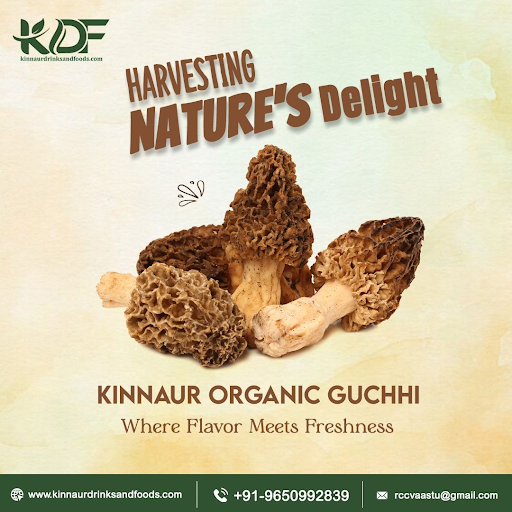
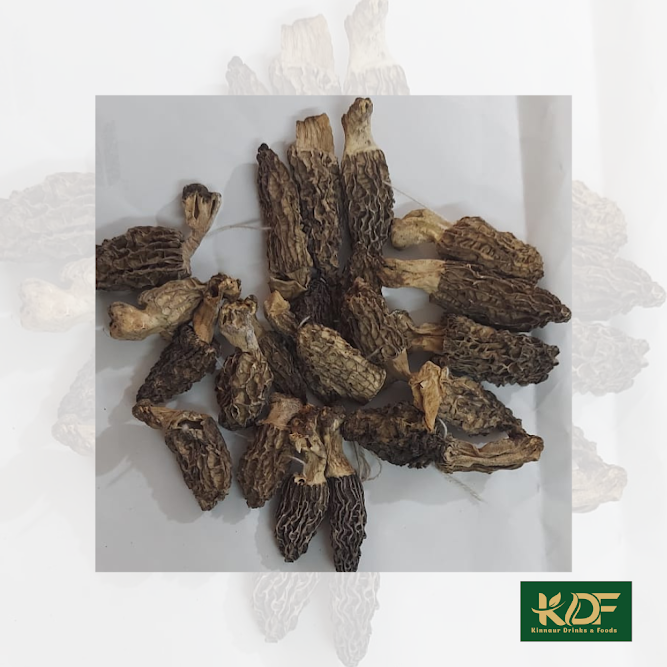
Guchhi (Morel Mushrooms)

1,500.00

SKU: N/A Category:

Product description

Guchchi India’s Most Prized Wild Mushroom, Directly from Kinnaur

Let’s begin with the one fact that explains everything about Guchchi: it cannot be cultivated. No farm, no controlled environment, no scientific attempt has successfully produced commercial quantities of Morchella esculenta. Guchchi grows only in the wild in specific forests at specific altitudes and only after the first snowfall of the season triggers its emergence from the forest floor. The supply is determined entirely by what nature produces. Demand has nothing to do with it.

This is why it costs what it costs. Not because of a branding decision, not because of a luxury mark-up, and not because of clever packaging. The scarcity is structural and permanent. Understanding this is the beginning of understanding why Guchchi, on a per-serving basis, is actually reasonably priced.

Where Guchchi grows and why not everywhere

Guchchi (Morchella esculenta, also called Morel or Moril) is found in specific forest ecosystems across northern India the Kangra Valley, Kinnaur, Kullu-Manali, parts of Jammu and Kashmir, and Uttarakhand. Not all these forests produce Guchchi in equal quantities, and the yield varies significantly from year to year depending on snowfall, soil moisture, and temperature in spring.

Our Guchchi comes from Kinnaur and surrounding areas of Himachal Pradesh collected by tribal community members who know exactly which forest clearings, which soil types, and which spring conditions produce the best yields. This is knowledge passed down through generations. It cannot be replicated by anyone without that knowledge and that relationship to the land.

Why the price is justified the per-serving calculation

A portion of Guchchi in a high-end restaurant serving using them in a dish costs ₹800–₹1,500 per person (where it appears at all). Buying directly from us means you get multiple restaurant-quality servings at a significantly lower per-gram cost. The comparison isn’t between Guchchi and regular mushrooms it’s between buying your own supply and paying restaurant mark-up every time you want this specific ingredient.

Buy Wild Guchchi from Kinnaur Limited Stock

Genuine wild Morel. Cannot be cultivated. Tribal collection, Kinnaur forests. FSSAI certified. Pan-India delivery.

Nutritional profile what you're paying for

Compound / Property Benefit / Detail
Protein Approximately 28–30g per 100g (dried) one of the highest protein contents of any mushroom. Significantly higher than button or oyster mushrooms.
Copper Very high supports immune function, bone strength, energy production, and red blood cell formation.
Potassium Cardiovascular health, fluid balance, muscle contraction and nerve function.
Zinc Immune function, wound healing, protein synthesis, taste and smell perception.
Selenium A trace mineral with antioxidant enzyme function. Guchchi is a notable food source.
Vitamin D One of the few non-animal food sources of Vitamin D relevant for vegetarians and vegans.
B vitamins (B2, B3, B5) Energy metabolism, nerve function, skin health.
Fibre Gut health and microbiome support.
Low fat, low calorie Approximately 31 calories per 100g extremely nutrient-dense relative to caloric content.

How to cook Guchchi the definitive guide

The golden rule of Guchchi cooking
Guchchi's flavour is earthy, complex, and deeply umami but it is also delicate. It must come out on its own terms. Strong spices, high heat, and aggressive cooking techniques destroy exactly what makes it worth buying. Everything below is designed around protecting the flavour you paid for.

Step 1: Rehydration do not skip this

Dried Guchchi must be rehydrated before cooking. Never cook dried mushrooms directly the texture will be tough and the flavour uneven.

  • Rinse dried Guchchi briefly under cold water to remove any grit or debris.
  • Soak in lukewarm water for 20–30 minutes until the mushrooms are fully softened and pliable.
  • Important: Retain the soaking liquid strained through a fine cloth or coffee filter, it is Guchchi stock highly flavoured and valuable. Use it in the dish.

Step 2: The slow sauté method (the right approach)

The most reliable cooking technique for Guchchi is a slow sauté in butter or ghee over medium-low heat:

  • Heat 1–2 tablespoons of unsalted butter or ghee in a heavy pan over medium-low heat.
  • Add the rehydrated Guchchi. Do not crowd the pan cook in batches if necessary.
  • Add a pinch of salt. Nothing else at this stage.
  • Cook slowly for 5–7 minutes, turning occasionally, until the Guchchi releases some liquid and begins to concentrate its flavour.
  • The liquid released during cooking, combined with the retained soaking liquid, becomes the basis of the sauce.

Step 3: The Guchchi pulao (the classic preparation)

Add the sautéed Guchchi (and its liquid) to a semi-cooked basmati rice at the dum stage cover tightly and finish cooking on very low heat for 10 minutes. The rice absorbs the Guchchi flavour throughout. Serve without garnish the mushroom is the point.

Avoid: Turmeric, strong red chillies, heavy spice powders, and tomato all of these overwhelm the Guchchi's subtle earthiness. Garam masala in very small quantities is acceptable. Salt, butter, and patience are the main tools.

Frequently asked questions

How much Guchchi do I need per serving?

Dried Guchchi expands approximately 5–7× its dried weight when rehydrated. For a Guchchi pulao serving 4 people, approximately 25–30g of dried Guchchi (expanding to roughly 150–180g rehydrated) is typical. Use less as a garnish or accent in a dish as little as 10–15g dried can add significant flavour.

How do I store dried Guchchi?

In a sealed airtight container away from moisture and light. Properly stored dried Guchchi keeps for 12–18 months. Moisture is the enemy even brief exposure to humidity can initiate mould. If your Guchchi smells musty or shows any visible mould, discard it.

Is Guchchi safe to eat raw?

No. All morel mushrooms, including Guchchi, contain hydrazine compounds that are neutralised by heat. Raw or undercooked Guchchi can cause gastrointestinal symptoms. Always cook thoroughly the slow sauté method described above is more than sufficient.

Can I verify that this is genuine wild Guchchi and not farmed?

True Morchella esculenta cannot be commercially farmed any "farmed Guchchi" on the market is either a different (inferior) species, or a false claim. Genuine Guchchi has a characteristic honeycomb-like cap with irregular pits and ridges nothing else looks quite like it. If what you receive does not match this appearance, contact us immediately.

Additional information

Quantity

50g