


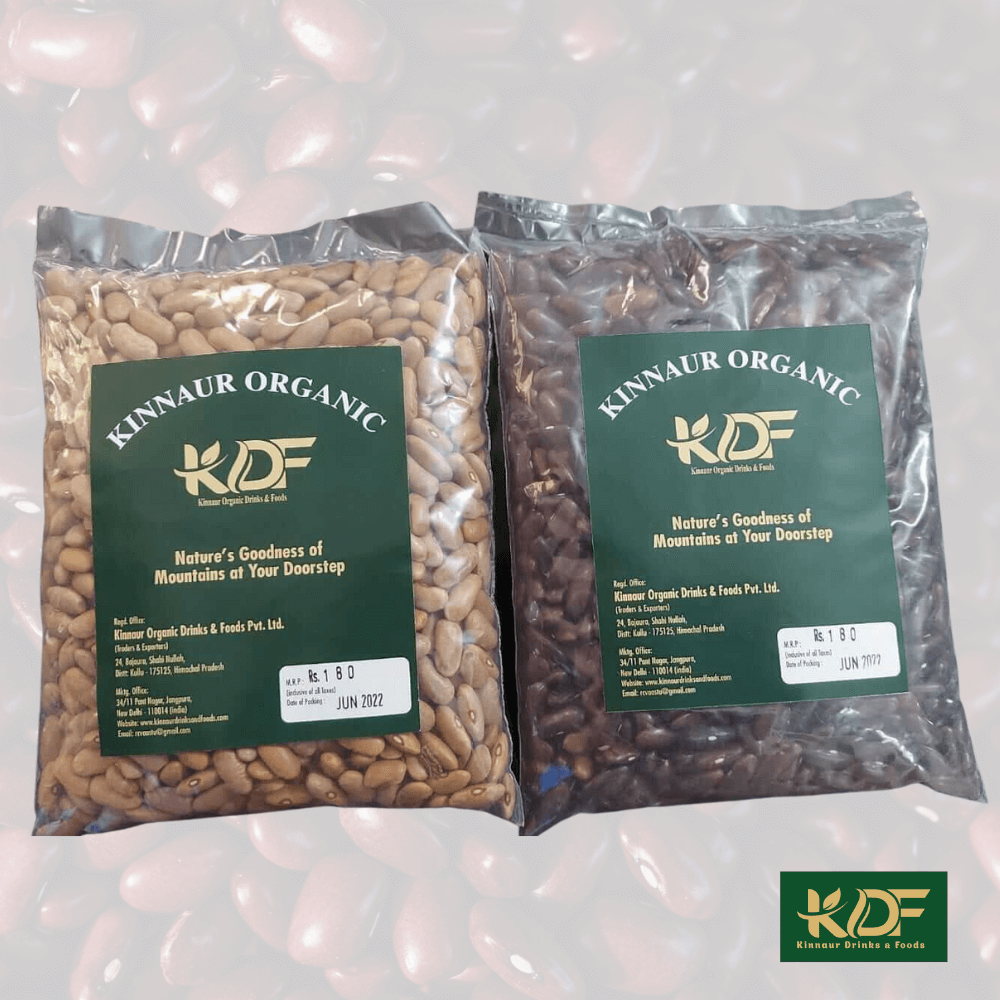
Rajmah (Kidney Beans): (Red & Yellow)

250.00 500.00Price range: ₹250.00 through ₹500.00

Experience the excellence of organic kidney beans in vibrant red and yellow varieties at Kinnaur Drinks and Foods. These versatile legumes offer rich flavors and valuable nutrition, perfect for a variety of culinary creations.

SKU: N/A Category:

Product description

Organic Kinnaur Rajmah – Red & Yellow Kidney Beans | 22g Protein per 100g

Most rajmah you buy has no provenance. No information about where it was grown, how it was stored, or what went into the soil. Kinnaur Rajmah is different: grown organically on the high-altitude farms of Kinnaur district, Himachal Pradesh, at elevations where synthetic chemical use is both impractical and culturally uncommon.

At 22 grams of protein per 100 grams, Kinnaur Rajmah is one of the most protein-dense legumes available in India. This isn’t a marketing number – it’s the natural protein concentration of legumes grown in high-altitude, mineral-rich mountain soils where plants develop more slowly and more densely. The flavour reflects this too: richer, more complex, and with a creamier texture when cooked than mass-produced lowland rajmah.

Red vs Yellow Rajmah – understanding both varieties

Red Kidney Beans (Lal Rajmah) Yellow Kidney Beans (Peela Rajmah)
Appearance Deep red skin, cream interior Pale yellow to gold skin
Flavour when cooked Rich, earthy, robust – classic rajmah flavour Slightly milder, nuttier, lighter
Texture Creamy interior with firm skin – holds shape well Softer skin, equally creamy – breaks down more readily
Best used in Classic rajma chawal, stews, chilli, thick gravies Soups, lighter gravies, salads, dal-style preparations
Protein content ~22g per 100g ~21g per 100g
Cooking time 45–60 minutes after soaking (pressure cooker: 15–20 min) 40–50 minutes after soaking (pressure cooker: 12–15 min)

Buy Organic Kinnaur Rajmah – Red & Yellow

22g protein per 100g. Chemical-free. High-altitude Kinnaur farming. FSSAI certified. Free delivery on orders above ₹2,500.

Nutritional profile - why Kinnaur Rajmah belongs in your kitchen regularly


Nutrient Benefit / Detail
Protein (22g per 100g) One of the highest protein legumes. Complete amino acid profile when eaten with rice - the combination creates a complementary protein source.
Dietary fibre Approximately 15g per 100g. Supports gut health, cholesterol management, blood sugar stabilisation, and long-lasting satiety.
Iron Important for red blood cell production and prevention of iron-deficiency anaemia - particularly relevant for vegetarian diets.
Folate (Vitamin B9) Critical for DNA synthesis, cell division, and pregnancy. Rajmah is one of the best plant sources of folate.
Magnesium Bone density, muscle function, blood pressure regulation.
Potassium Cardiovascular health, fluid balance, reduces risk of hypertension.
Low glycaemic index Rajmah has a GI of approximately 29 - among the lowest of commonly eaten foods. Excellent for blood sugar management.
Zero cholesterol Completely cholesterol-free. Ideal for heart-healthy diets.

How to cook Kinnaur Rajmah


The essential prep: soaking

Always soak rajmah before cooking. This is not optional - unsoaked kidney beans contain phytohaemagglutinin (a natural lectin) that can cause digestive distress. Soaking for at least 8 hours (ideally overnight) in cold water removes most of this compound. Drain the soaking water, rinse, then cook in fresh water.

  • Soak in 3× their volume of cold water for 8–12 hours.
  • Drain the soaking water completely - do not use it for cooking.
  • Rinse and cook in fresh water until tender.
  • Pressure cooker: 15–20 minutes on high pressure for red rajmah; 12–15 minutes for yellow.
  • Open pot: 45–60 minutes at a gentle simmer.

The classic Punjabi rajma chawal

Onion-tomato base with ginger, garlic, coriander, turmeric, red chilli, and garam masala - cooked down until rich and fragrant, then simmered with the boiled beans until the gravy thickens and coats the rajmah. Served over steamed basmati rice. If you've had rajma chawal from the dhaba belt of Delhi and Punjab, you know exactly what this means. The Kinnaur variety adds a depth of flavour to this dish that mass-produced rajmah doesn't.

  • Key technique: Mash a few beans against the side of the pan with the back of a spoon while the gravy simmers - this thickens the gravy naturally without adding any flour or cornstarch.

Other uses

  • Rajmah salad: Boiled and cooled kidney beans with red onion, tomato, coriander, lemon, and chaat masala.
  • Bean chilli: Red kidney beans are the classic base for Mexican-style chilli con carne (or a vegetarian version with sweet potato and smoked paprika).
  • Rajmah tikki: Mashed kidney beans with spices and a binding agent, shaped into patties and pan-fried. High-protein alternative to potato-based tikkis.
  • Mixed dal: Yellow rajmah can be used in mixed dal preparations alongside toor, masoor, and chana dal for a richer, heartier blend.

Frequently asked questions


Do I really need to soak rajmah before cooking?

Yes - particularly for kidney beans. Raw or undercooked kidney beans contain phytohaemagglutinin, a natural lectin that can cause nausea, vomiting, and digestive distress within a few hours of eating. Soaking and proper cooking (boiling for at least 10 minutes before simmering) destroys this compound. Pressure cooking after soaking also works. Never eat kidney beans raw or after only a brief simmer.

Which variety should I buy - red or yellow?

If you want the classic rajma chawal experience with its rich, dark gravy - buy red. If you prefer lighter dishes, soups, or salads where a milder bean complements rather than dominates - buy yellow. We sell both, and many customers buy a mix to use across different preparations.

Is organic rajmah nutritionally superior to regular rajmah?

Direct nutritional comparison studies between organic and conventional rajmah are limited. The primary advantage of organic cultivation is the absence of synthetic pesticide and herbicide residues. The high-altitude growing conditions of Kinnaur also mean mineral-dense soils and slower plant development - both associated with more concentrated nutrient profiles. Whether this translates to measurable nutritional differences at the consumer level is difficult to quantify precisely, but the absence of chemical residues is a clear and documented benefit.

Can I freeze cooked rajmah?

Yes - cooked rajmah freezes excellently. Cook a large batch, allow to cool completely, portion into airtight bags or containers, and freeze for up to 3 months. Thaw in the refrigerator overnight or directly in the cooking vessel. This is one of the most practical meal-prep strategies for regular rajma chawal eaters.

Additional information

Quantity

500g, 1000g