

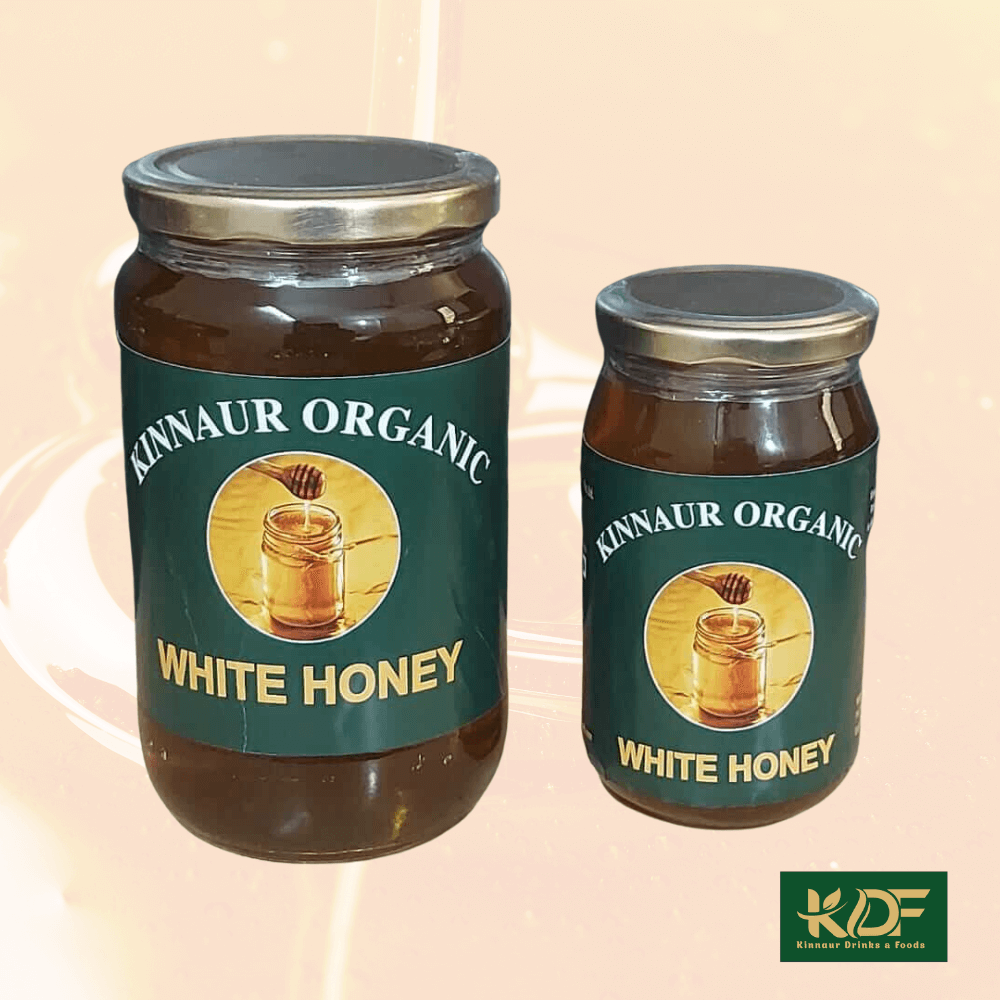
White Honey

400.00 1,500.00Price range: ₹400.00 through ₹1,500.00

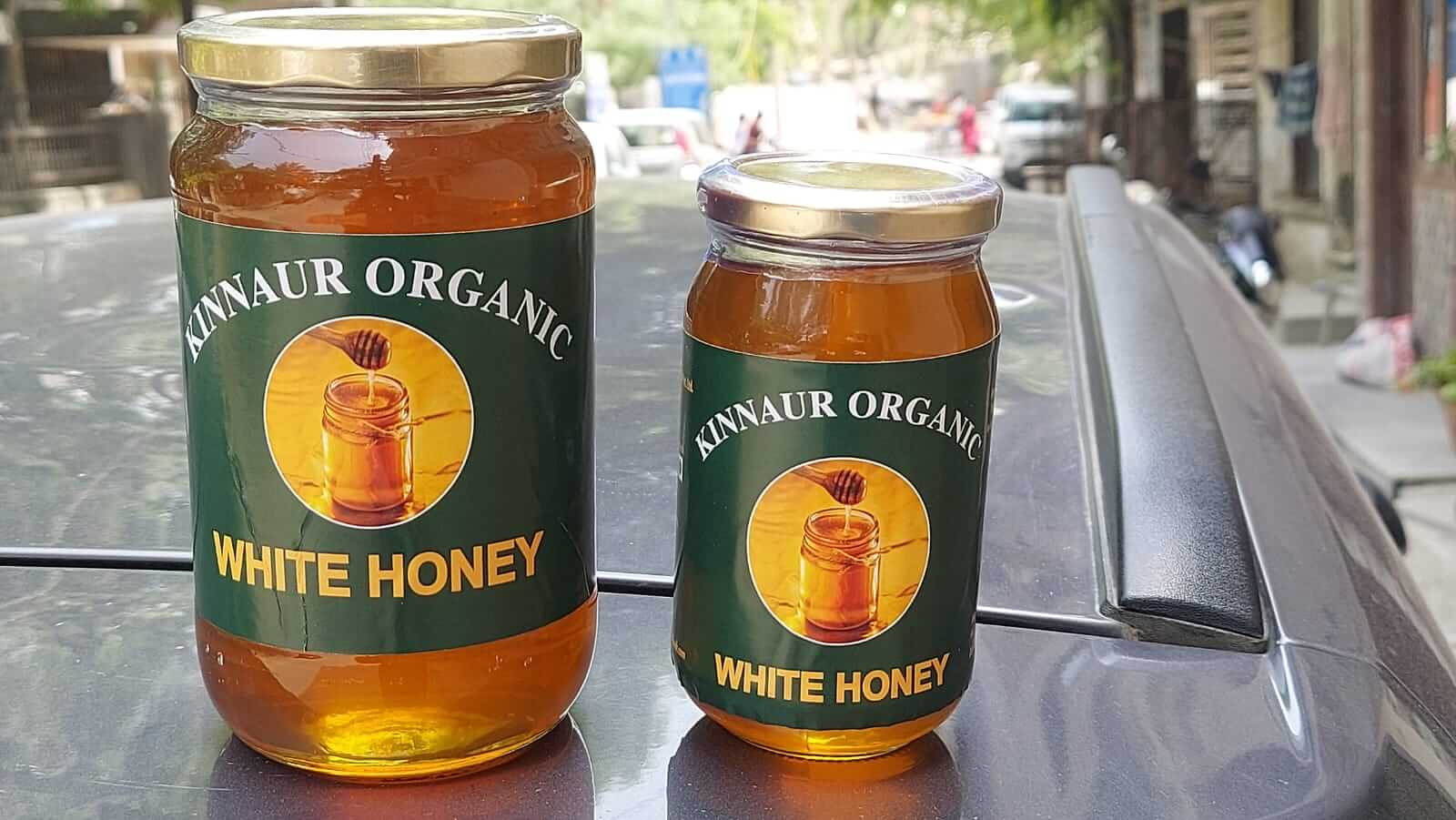
White honeys generally have a milder flavor as compared to darker honeys. Flowers that produce white honey include: Sage, Alfalfa, Fireweed, White Clover.  White honey doesn’t exactly look white. Instead it’s a very light amber or an almost clear “water-white” color.

SKU: N/A Category:

Product description

Wild White Honey from Chamba’s Himalayan Forests -Raw, Rare, and Never Heated

The colour of honey is determined by the flowers the bees visit. White honey -which isn’t actually white, but a very light amber, nearly translucent -comes from flowers that produce low-pigment nectar. In the forests of Chamba, Himachal Pradesh, those flowers include sage, alfalfa, fireweed, and white clover growing at altitude. The beekeepers who tend these hives don’t heat the honey, don’t filter it aggressively, and don’t blend it with product from other regions. What you receive is what the bees made.

Raw honey and processed honey are not the same product. Heating honey above 40°C -which almost all commercial honey undergoes -destroys the enzymes, degrades the phytonutrients, and kills the beneficial yeasts and bacteria that make raw honey nutritionally distinct from golden sugar syrup. Our White Honey from Chamba is never heated beyond what occurs naturally in the hive.

What makes white honey different from regular golden honey

White honey is a rare variety of honey collected from specific Himalayan flowers and preserved in its raw form. Unlike commercially processed honey, it retains its natural enzymes, phytonutrients, and delicate floral character.

White Honey (Ours) Standard Golden Honey Commercial Processed Honey
Colour Very light amber / near-clear Medium to deep amber Uniform golden — often adjusted
Flower sources Sage, alfalfa, fireweed, white clover -specific altitude flowers Multi-flower, usually undisclosed Mixed sources, often blended across batches
Processing Raw — never heated above 40°C Minimal to moderate processing Heated, filtered, often blended
Phytonutrients Fully intact -includes flavonoids, phenolic acids, pollen Partially degraded Largely destroyed by heat processing
Flavour profile Mild, delicate, subtly sweet -the most approachable of the honey varieties Stronger, more familiar honey taste Consistent but lacks complexity
Best for Gifting, teas, direct eating, those new to raw honey General use, cooking Baking where honey flavour isn’t primary

Buy Chamba Wild White Honey – Starting from 400.00 – 1,500.00

Raw, unprocessed. Chamba forests, Himachal Pradesh. FSSAI certified. Free delivery on orders above ₹2,500.

Add to Cart → [https://kinnaurdrinksandfoods.com/product/white-honey]
Properties of raw Chamba White Honey

Property / Compound Benefit / Detail
Enzymes (amylase, invertase, glucose oxidase) Destroyed by heating -present only in raw honey. Invertase converts sucrose to glucose and fructose. Glucose oxidase produces hydrogen peroxide -the basis of honey's antibacterial properties.
Flavonoids and phenolic acids Antioxidant compounds that may help protect cells from oxidative damage. Higher in raw honey than processed.
Pollen (residual) Natural pollen from Chamba's alpine flowers retained in unfiltered raw honey. Considered nutritionally beneficial.
Propolis traces Antimicrobial resin compound produced by bees from plant material. Present in small amounts in raw unfiltered honey.
Natural enzymes and acids Lower pH (3.9–4.5) -the mild acidity is part of honey's natural preservation mechanism.
Vitamins and minerals B vitamins, Vitamin C, calcium, magnesium, potassium ,present in trace amounts.

How to use Chamba White Honey

Direct eating -the purest experience

A teaspoon of white honey directly, or on a piece of warm bread with butter. The mild flavour of white honey makes it exceptionally good this way -it doesn't overpower, it complements.

In teas and warm drinks

  • Important: Add honey to drinks that have cooled to below 40°C -hot liquid destroys the enzymes that make raw honey worth buying. Let your chai or herbal tea cool slightly before stirring in honey.
  • Pairs particularly well with green tea, tulsi tea, ginger lemon water, and warm milk.
  • A teaspoon in warm water with a few drops of lemon juice first thing in the morning -a traditional Ayurvedic practice.

For skin use (topical)

  • Raw honey has been used topically in traditional medicine for wound healing, skin hydration, and treatment of dry or irritated skin.
  • Face mask: Apply a thin layer of raw honey to clean skin, leave for 15–20 minutes, rinse with warm water. The natural humectant properties draw moisture into the skin.
  • Lip care: A small amount of raw honey on chapped lips -leave for 5 minutes and rinse.

As a cough soother (traditional use)

A teaspoon of raw honey has been used in traditional Ayurvedic and folk medicine as a natural cough soother. This is a traditional use, not a medical treatment. The mild antibacterial properties and coating effect of honey may provide temporary relief for mild throat irritation.

Additional information

Quantity

250g, 500g, 1000g