

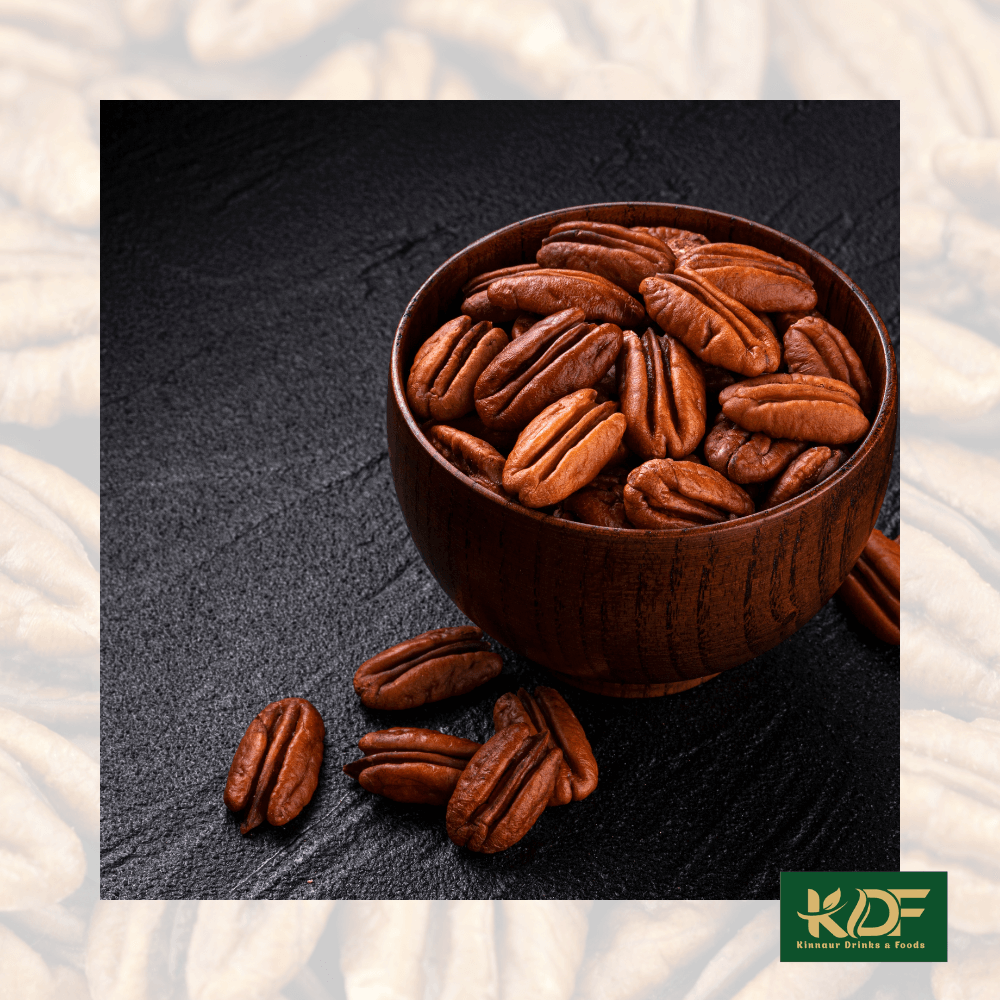
Pecan Nuts

900.00 1,800.00Price range: ₹900.00 through ₹1,800.00

Pecan Nuts (Cariya Illionoinensis) are fruits of a species of hickory tree indigenous to North America and now  grown at Pangi Valley of Chamba in H.P.

SKU: N/A Category:

Product description

Pecan Nuts from Pangi Valley, Chamba – India’s Own Pecan

Most Indians who buy pecan nuts are buying imported ones – from the United States or Mexico, which together dominate over 90% of global pecan production. This is the default assumption, because almost nobody knows that pecan trees grow in India. They do – in the Pangi Valley of Chamba district, Himachal Pradesh. A small number of pecan trees were planted in the valley decades ago, adapted to the climate, and have been producing nuts that are, by any measure, comparable in quality to their American counterparts – without the import premium or the long-distance supply chain.

Our pecans come from Pangi Valley – one of the most remote and least accessible valleys in Himachal Pradesh. The conditions there are extreme: high altitude, cold winters, short summers, rocky terrain. The pecan trees that survive and produce in those conditions are not pampered commercial orchard trees. What they produce is richer, more concentrated, and genuinely worth discovering.

Why Indian-grown pecans are different from imported ones

Factor Pangi Valley Pecans (Ours) Imported US/Mexican Pecans
Origin Pangi Valley, Chamba, Himachal Pradesh – India Southern USA, Mexico
Growing conditions High-altitude, extreme climate, rocky terrain Commercial orchards, irrigated, intensive management
Chemical use Minimal – remote valley farming Intensive pesticide/herbicide use in commercial US orchards
Supply chain Direct from valley → you Orchard → US exporter → Indian importer → distributor → retailer
Import duties/premium None – domestic product Import costs reflected in consumer price
Environmental impact No air miles, no refrigerated shipping Long-distance freight from USA/Mexico

Buy Pangi Valley Pecan Nuts – ₹900–₹1,800

India’s own pecan. Grown in Pangi Valley, Chamba, Himachal Pradesh. FSSAI certified. Free delivery above ₹2,500.

Nutritional profile - what makes pecans worth buying


Nutrient Benefit / Detail
Monounsaturated fats (MUFA) Approximately 40g per 100g - one of the highest MUFA contents of any nut. Cardiovascular health, cholesterol management.
Antioxidants Pecans consistently rank among the highest antioxidant-containing nuts in USDA studies. High in ellagic acid and Vitamin E.
Anti-inflammatory properties The combination of antioxidants, magnesium, and oleic acid in pecans is associated with reduced inflammatory markers in research.
Vitamin E (gamma-tocopherol) Particularly high in gamma-tocopherol - a form of Vitamin E with strong antioxidant activity, associated with cancer risk reduction in research.
Zinc Immune function, wound healing, taste and smell perception, skin health.
Magnesium Bone density, muscle function, blood pressure regulation.
Protein Approximately 9g per 100g.
Dietary fibre Approximately 10g per 100g. Colon health, cholesterol management.

How to use Pangi Valley pecans


As a snack

Eat raw or lightly toasted. To toast: spread on a baking tray, roast at 170°C for 6–8 minutes until fragrant. Toasting deepens the naturally buttery flavour and adds a satisfying crunch. Season with a pinch of rock salt, cinnamon, or cayenne depending on preference.

In Indian cooking

  • Pecan barfi and laddoos: Ground toasted pecans with jaggery and ghee - richly flavoured traditional sweets.
  • In rice and grain dishes: Pecans add a buttery, slightly caramelised depth when scattered through biryanis or mixed grain salads.
  • Savoury chutneys: Roasted pecans blended with tamarind, dates, and spices produce a complex, slightly sweet-savoury chutney.

In baking and Western-style cooking

  • Pecan pie (the classic) - toasted pecans in a caramel-egg custard base.
  • Banana bread with pecans - the richness of pecans pairs perfectly with ripe banana.
  • Candied pecans - tossed in brown sugar, cinnamon, and egg white, then baked until glazed.
  • Salad topping - particularly good over bitter greens (rocket, endive) with blue cheese and a honey-mustard dressing.

Frequently asked questions


How many pecan nuts can I eat per day?

A typical recommended serving is 28–30g (approximately 15 pecan halves or 8–10 whole pecans). This provides approximately 200 calories, 20g of healthy fat, and 3g of protein. As a general guide, a small handful daily as part of a balanced diet is appropriate. Pecans are calorie-dense - moderate portions are wise if you're managing caloric intake.

Do pecans go rancid quickly?

Yes - pecans have a high polyunsaturated fat content which makes them relatively susceptible to rancidity. Store in an airtight container in the refrigerator for up to 6 months, or freeze for up to 2 years. At room temperature in a warm environment, pecans can turn rancid within 4–6 weeks. Rancid pecans smell and taste sour/bitter - discard if you notice this.

Are pecans suitable for people with tree nut allergies?

Pecans are tree nuts and a known allergen. People with tree nut allergies should avoid pecans, and cross-reactivity between pecans and other nuts (particularly walnuts, which are closely related botanically) is well documented. Consult your allergist.

Additional information

Quantity

250g, 500g, 1000g