
Product description
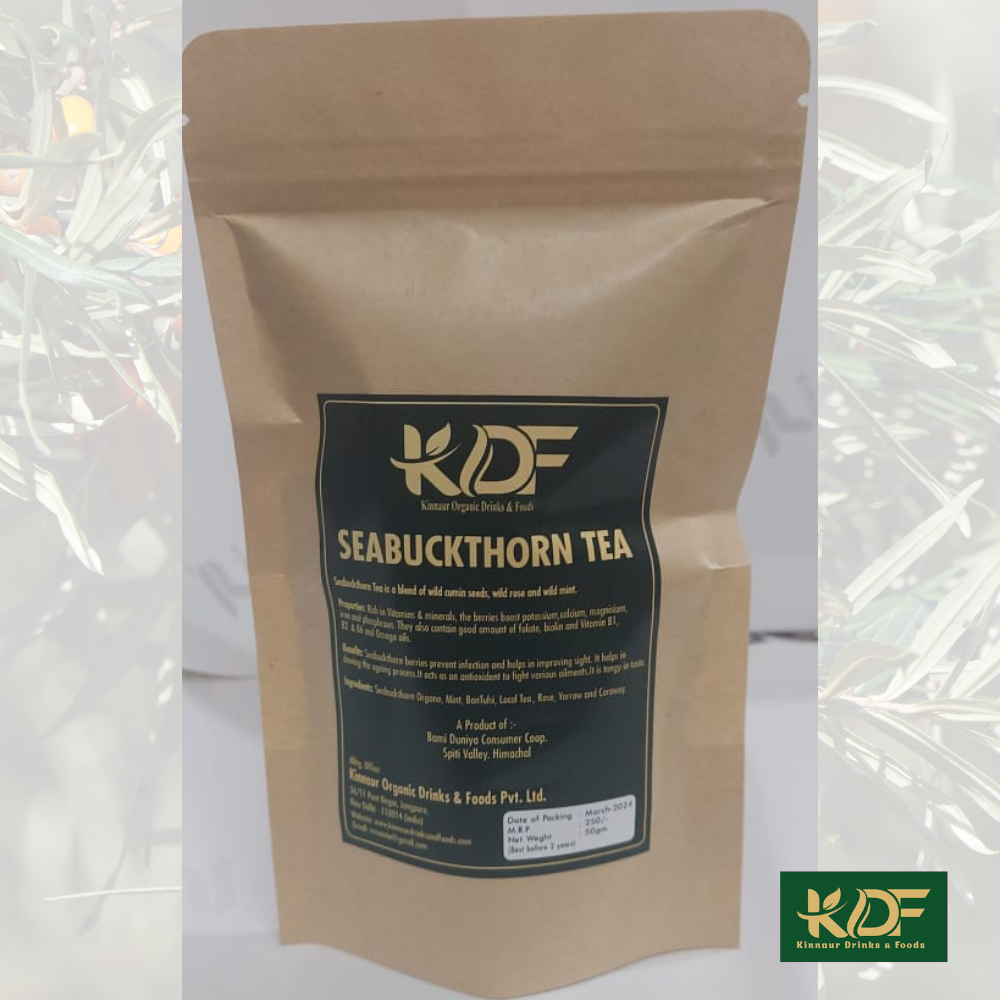
Seabuckthorn Herbal Tea Eight Wild Mountain Herbs from Spiti Valley
This is not a tea bag filled with dried chamomile and a label that says “Himalayan Herbal Blend.” This is a blend of eight specific wild plants gathered from the high-altitude terrain of Spiti Valley – plants that local communities have been brewing together for generations because, individually and together, they have a track record.
It is also not a green tea. There are no Camellia sinensis leaves in this blend. It is an entirely herbal infusion – caffeine-free, tangy, citrusy, and unmistakably mountain in character.
If you’re looking for an evening tea that won’t keep you awake, a genuinely wild-crafted alternative to commercial herbal blends, or something that tastes unlike anything in your current tea collection – this is it.
The eight ingredients – and why each one is in the blend
Most herbal tea companies list ingredients on a label. We’ll explain what each one is and why it’s included.
1. Seabuckthorn (Hippophae rhamnoides)
The base of the blend. Seabuckthorn berries and leaves contribute the signature citrusy tartness of this tea, along with Vitamin C, flavonoids, and carotenoids. At Spiti’s altitude, seabuckthorn grows with particularly high concentrations of these compounds.
2. Origano (Wild Mountain Oregano)
Not the dried supermarket oregano. Wild mountain oregano (a distinct high-altitude variety) has a more intense, resinous aroma and has been used in traditional mountain medicine for respiratory health and antimicrobial properties. It adds a herbal, slightly peppery note to the blend.
3. Mint (Wild Pudina)
Wild mint from the mountain meadows – more aromatic and less sweet than cultivated varieties. Contributes digestive support, cooling properties, and a clean freshness that balances the tartness of the seabuckthorn.
4. Ban Tulsi (Wild Holy Basil)
Ban Tulsi is the wild form of the cultivated Tulsi plant. It grows at high altitudes without human cultivation and is considered in Ayurveda to be more potent than its farmed counterpart. An adaptogen – traditionally used to support stress response, immunity, and respiratory health.
5. Local Tea (Regional Mountain Tea)
A small quantity of regional mountain tea leaves indigenous to Spiti, used in local brewing traditions. Not Camellia sinensis – a distinct regional variety with a light, earthy character.
6. Rose (Wild Himalayan Rose)
Wild rose petals from Spiti’s valley sides. Contribute floral sweetness, Vitamin C, and antioxidants. In Ayurvedic tradition, rose is associated with heart health and emotional wellbeing. In this blend, it softens the sharp edges of the seabuckthorn tartness.
7. Yarrow (Achillea millefolium)
A traditional medicinal herb found across high-altitude Himalayan regions. Yarrow has been used for centuries in folk medicine for digestive health and general tonic properties. It adds a subtle, slightly bitter medicinal depth to the blend that prevents it from being overly sweet or one-dimensional.
8. Caraway (Carum carvi)
A relative of Kala Zeera – wild caraway seeds from Kinnaur’s high forests. Warming, slightly spiced, with strong carminative (digestive) properties. It anchors the blend with depth and a mild warmth that lingers pleasantly after the first sip.
Taste – what to expect
Citrusy, tangy, with a complex herbal backdrop. The seabuckthorn gives it an immediate tartness – bright and fruity, like a sour berry. The mint and wild rose lift it. The yarrow and caraway add earthy depth. The ban tulsi gives it a slightly spiced, almost medicinal warmth. It doesn’t taste like anything you’ve had before. That’s the point.
Shop Seabuckthorn Herbal Tea
Eight wild mountain herbs. No artificial flavouring. No green tea. Caffeine-free. From Spiti Valley. FSSAI certified.